The Dream That Burned
It was supposed to be the greatest sporting spectacle in India’s modern history. Lionel Messi, the eight-time Ballon d’Or winner, the man who completed football in Qatar, returning to the football-mad city of Kolkata after 14 years. The “GOAT Tour of India 2025” was marketed as a spiritual homecoming, a chance for 85,000 devotees to worship at the altar of their Argentine god at the iconic Salt Lake Stadium.
Instead, on a cold Saturday morning in December, the dream descended into a “massacre” of protocol, safety, and dignity.
By the time the sun set over the Vivekananda Yuba Bharati Krirangan, the stadium looked like a war zone. Broken chairs littered the track, police were lathi-charging furious mobs, barricades were torched, and the organizer of the event was in handcuffs. Lionel Messi himself—visibly shaken, swarmed by politicians, and unable to complete even a single lap of honor—had been whisked away to safety after just 20 minutes.
This is the full, uncensored story of how greed, mismanagement, and VIP culture turned a celebration of sport into a national embarrassment.
The Anatomy of a Riot
To understand the rage that exploded in Kolkata, we must look at the timeline of the disaster. This was not a spontaneous outburst; it was a slow-motion train wreck fueled by broken promises.
The “Selfie Massacre”: When VIPs Hijacked the Moment
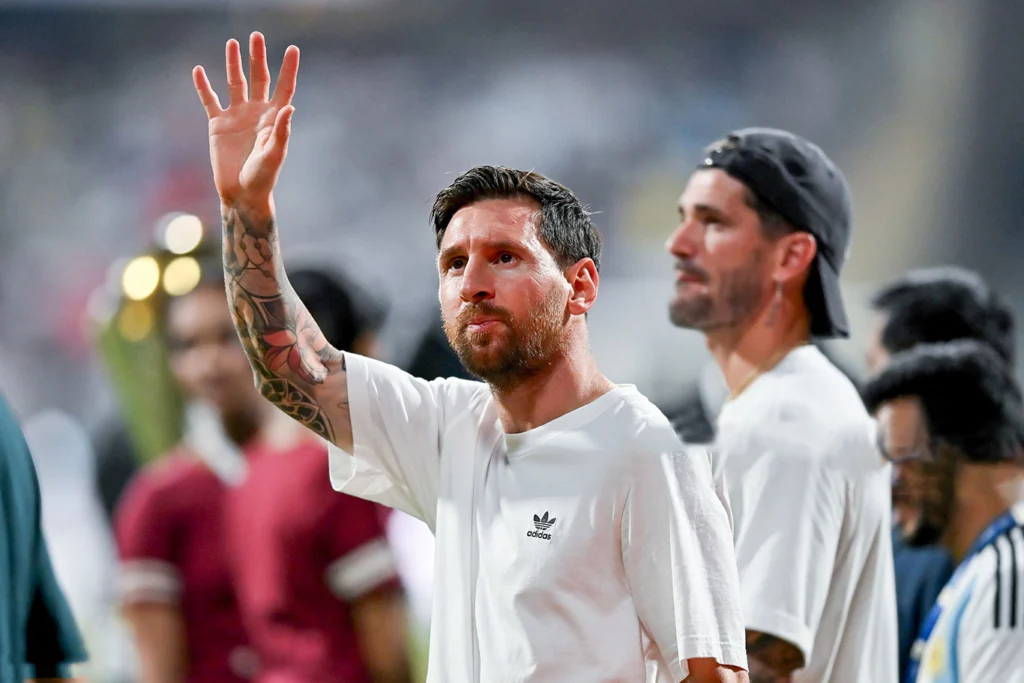
The trouble began the moment Messi stepped onto the pitch. The plan was simple: a felicitation ceremony, a lap of honor to greet the 85,000 screaming fans, and a brief exhibition game involving local teams.
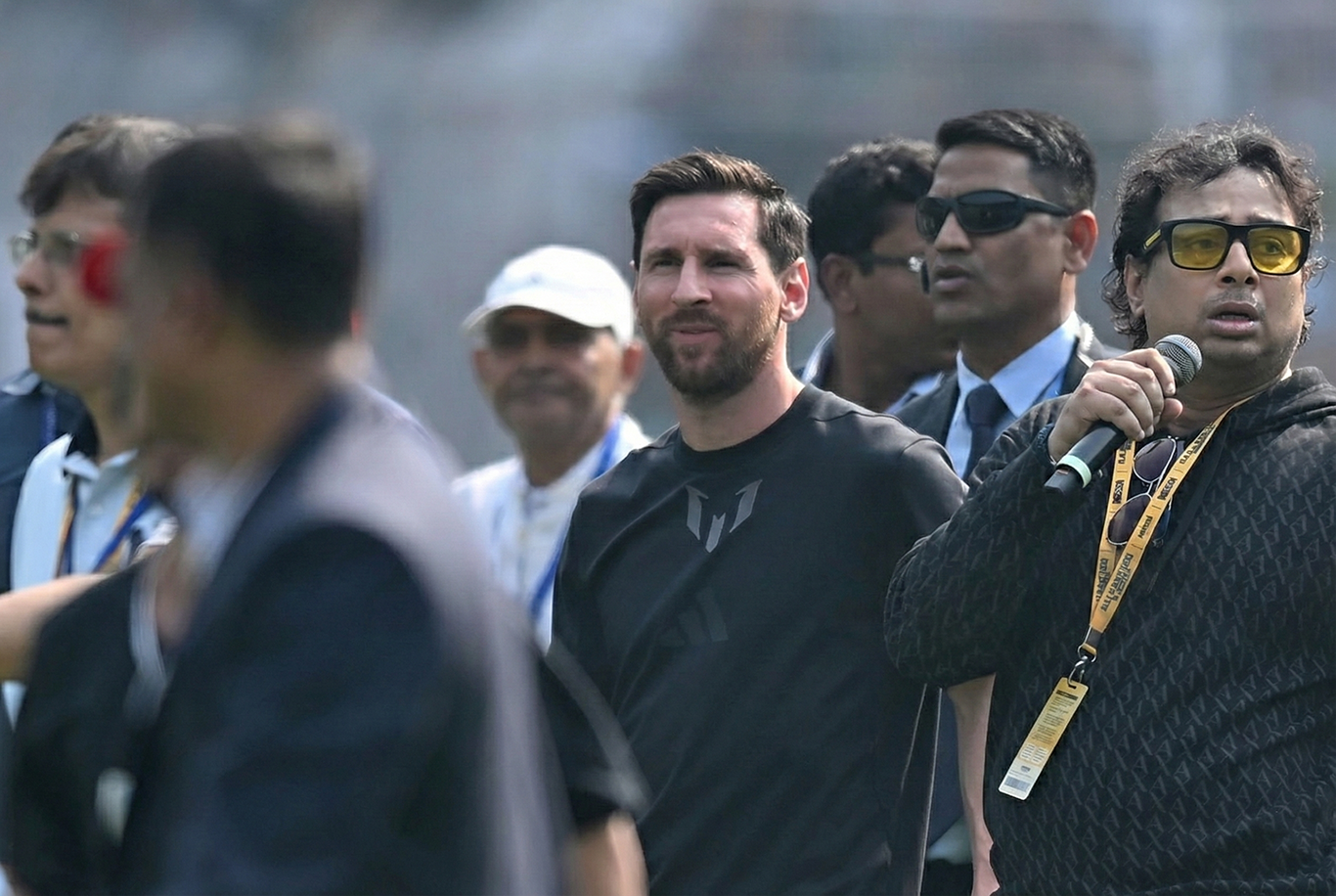
But protocol collapsed instantly. As Messi walked out, he was not met by adoring young fans or football legends, but by a tidal wave of local politicians, bureaucrats, and their entourages. In scenes that were broadcast live to a horrified global audience, grown men and women in formal wear swarmed the World Cup winner, shoving phones in his face for selfies, grabbing his arm, and blocking him from the view of the paying public.
Messi, usually stoic, looked visibly uncomfortable. Reports from the ground state he “lost his cool,” gesturing to his security to get him out. The “lap of honor” became a frantic scurry to the exit. He was on the field for less than 30 minutes. He did not play. He barely waved.
The Fan Revolt: “We Paid for Messi, Not Ministers”
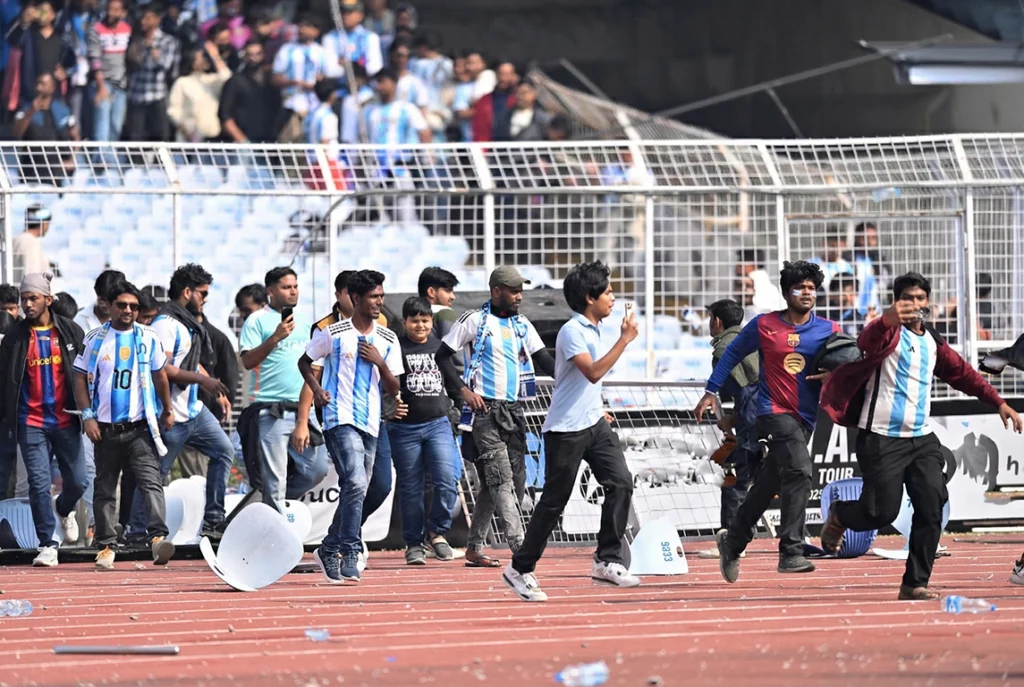
The spark that lit the fuse was the realization by the general public that they had been scammed.
- The Cost: Tickets for the event were sold for exorbitant prices, ranging from ₹5,000 to over ₹20,000—amounts that represent a month’s salary for many in the crowd.
- The View: Due to the massive stage erected for dignitaries and the swarm of VIPs on the pitch, the vast majority of fans in the expensive lower tiers could not see Messi at all. The giant screens, which were supposed to broadcast the event, reportedly malfunctioned or were blocked.
When the announcement came that Messi had left the stadium and would not be returning, the mood shifted from disappointment to fury.
“We sold our jewelry to buy these tickets,” one weeping fan told local news channels. “We waited all night. And we saw nothing but the backs of politicians.”
Vandalism and Police Action
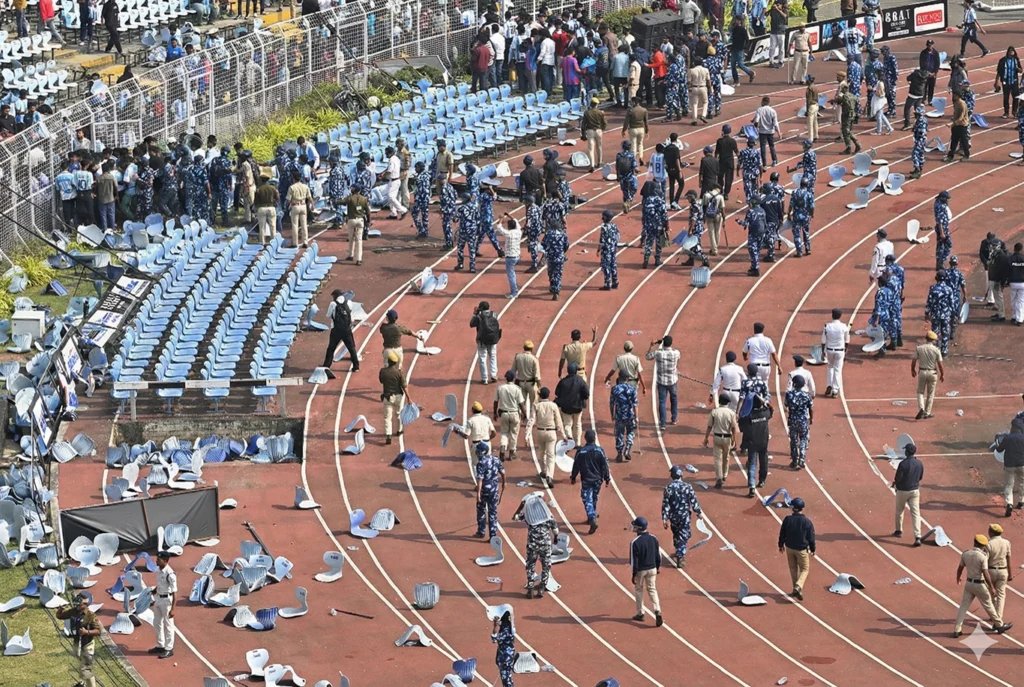
What followed was a scene of carnage rarely seen in Indian sports.
The Stadium Siege
At approximately 12:30 PM, the barricades fell. Furious fans, realizing the show was over, began to dismantle the stadium piece by piece.
- Destruction: Videos circulating on X (formerly Twitter) showed groups of young men ripping plastic seats out of the concrete stands and hurling them onto the running track.
- The Pitch Invasion: Hundreds of fans broke through the perimeter fencing, overwhelming the private security guards. They stormed the pitch, tearing down the “GOAT Tour” branding banners, smashing the VIP stage, and attempting to chase the official convoys.
- The Fire: In one corner of the stadium, a pile of merchandise and advertising hoardings was set on fire, sending a plume of black smoke into the Kolkata sky.
The State Strikes Back
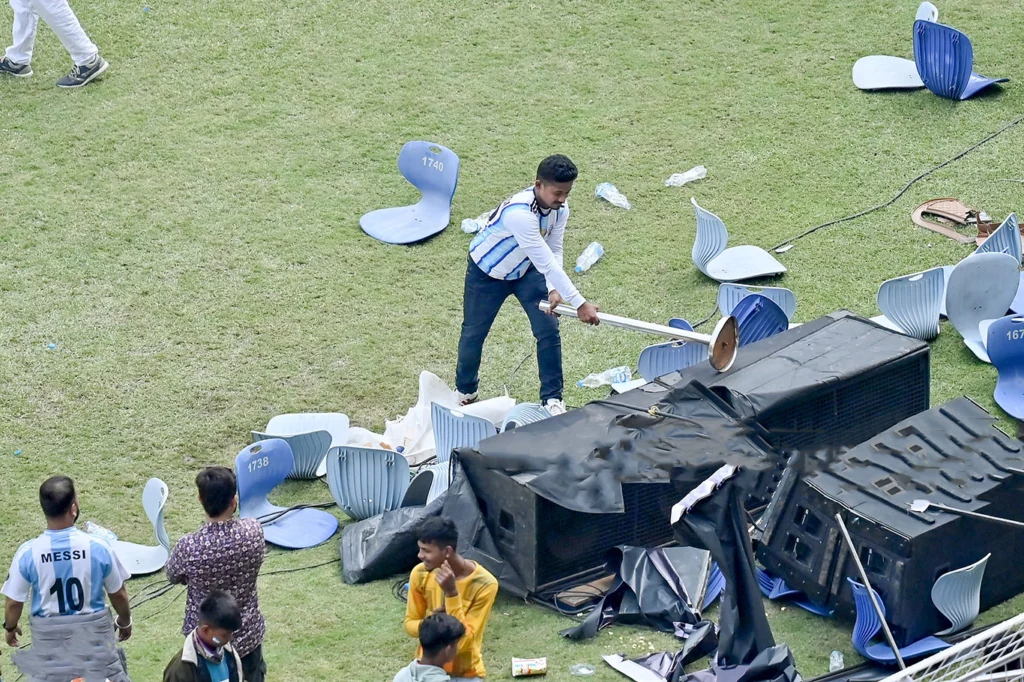
The Kolkata Police, initially caught off guard by the ferocity of the crowd, responded with brute force. The Rapid Action Force (RAF) was deployed, initiating a lathi-charge (baton charge) to clear the pitch. Footage showed officers chasing fans through the stands, striking anyone within reach.
It wasn’t a celebration of football; it looked like a scene from a civil insurrection.
Arrest of the Organizer
By Saturday evening, the blame game had found its primary target. Satadru Dutta, the high-profile sports promoter and the face of the “GOAT Tour,” was arrested by the Kolkata Police.
The Charges
Dutta, who had famously brought Pele and Maradona to Kolkata in the past, now faces serious criminal charges, potentially including:
- Cheating and Fraud: For selling tickets to an event that did not deliver the promised services (i.e., a match or a proper interaction).
- Criminal Negligence: For failing to provide adequate security infrastructure for a crowd of that magnitude.
- Mismanagement: The police FIR reportedly cites the “gross overselling” of tickets, creating a stampede-like situation that endangered lives.
Dutta has claimed he is a scapegoat, arguing that the VIP crowding was beyond his control, but for the thousands of fans demanding refunds, he is the architect of this disaster.
A State Apologizes
The chaos was so severe that it reached the highest office in West Bengal. Chief Minister Mamata Banerjee, who had previously met Messi, was forced to issue a public apology.
“I am deeply disturbed and shocked by the mismanagement witnessed today at Salt Lake Stadium,” Banerjee posted on social media. “I sincerely apologize to Lionel Messi, as well as to all sports lovers and his fans, for the unfortunate incident.”
The state government has ordered a high-level inquiry to determine how so many unauthorized people were allowed onto the pitch and why the security protocols failed so spectacularly.
The “VIP Culture” Plague
This incident has reignited a fierce debate about India’s sporting culture. Why does every major event in the country seem to become a photo-op for politicians rather than a service to the fans?
International sports analysts have been ruthless in their assessment. The images of Messi being mobbed by bureaucrats while fans rioted in the background reinforce a negative stereotype about India’s ability to host global mega-events. With India bidding for the 2036 Olympics, the “Kolkata Chaos” serves as a devastating counter-argument. If the authorities cannot manage a 30-minute appearance by one footballer, how can they manage the world’s biggest sporting event?
The Sadness of a Broken Legacy
Lionel Messi will likely never return to Kolkata. The image he takes away is not of the passion of the fans—who famously painted the city in blue and white during the World Cup—but of the aggression of the mob and the incompetence of the organizers.
The “massacre” here was not of bodies, but of trust. It was the massacre of a city’s reputation and the massacre of a once-in-a-lifetime memory for 85,000 people. The broken chairs can be fixed, and the organizers can be bailed out of jail, but the shame of December 13, 2025, will hang over Indian football for a very long time.
About the Author